Home › Device Reviews › Positional Therapy Devices
Positional Rankings
Best Positional Therapy Devices: Tested & Ranked
We buy every positional device at full price, test it for a minimum of four weeks, and score it across seven criteria. If your snoring stops when you roll to your side, these devices may be all you need — no mouthpiece required.
How It Works
What Is Positional Therapy?
Positional therapy is the simplest category of anti-snoring intervention: it stops you from sleeping on your back. In the supine position, gravity pulls your tongue and soft palate into the airway, causing snoring. Side-sleeping removes that gravitational collapse. Positional devices range from foam bumper belts that make back-sleeping uncomfortable, to vibrating sensors that nudge you onto your side when they detect snoring or supine position. For positional snorers, these devices can be as effective as an oral appliance — without putting anything in your mouth.
Bumper belts
Worn around the chest with foam bumpers on the back. Makes supine sleeping uncomfortable enough to stay on your side. No electronics, no charging.
Vibrating sensors
Detect back-sleeping via accelerometer or microphone and apply progressive vibration until you roll to your side. Most include app-based compliance tracking.
Pillow inserts
Inflate beneath your head when snoring is detected via a bedside microphone, gently repositioning the head without waking you fully. No body contact required.
Full Reviews
Our Tested & Scored Devices
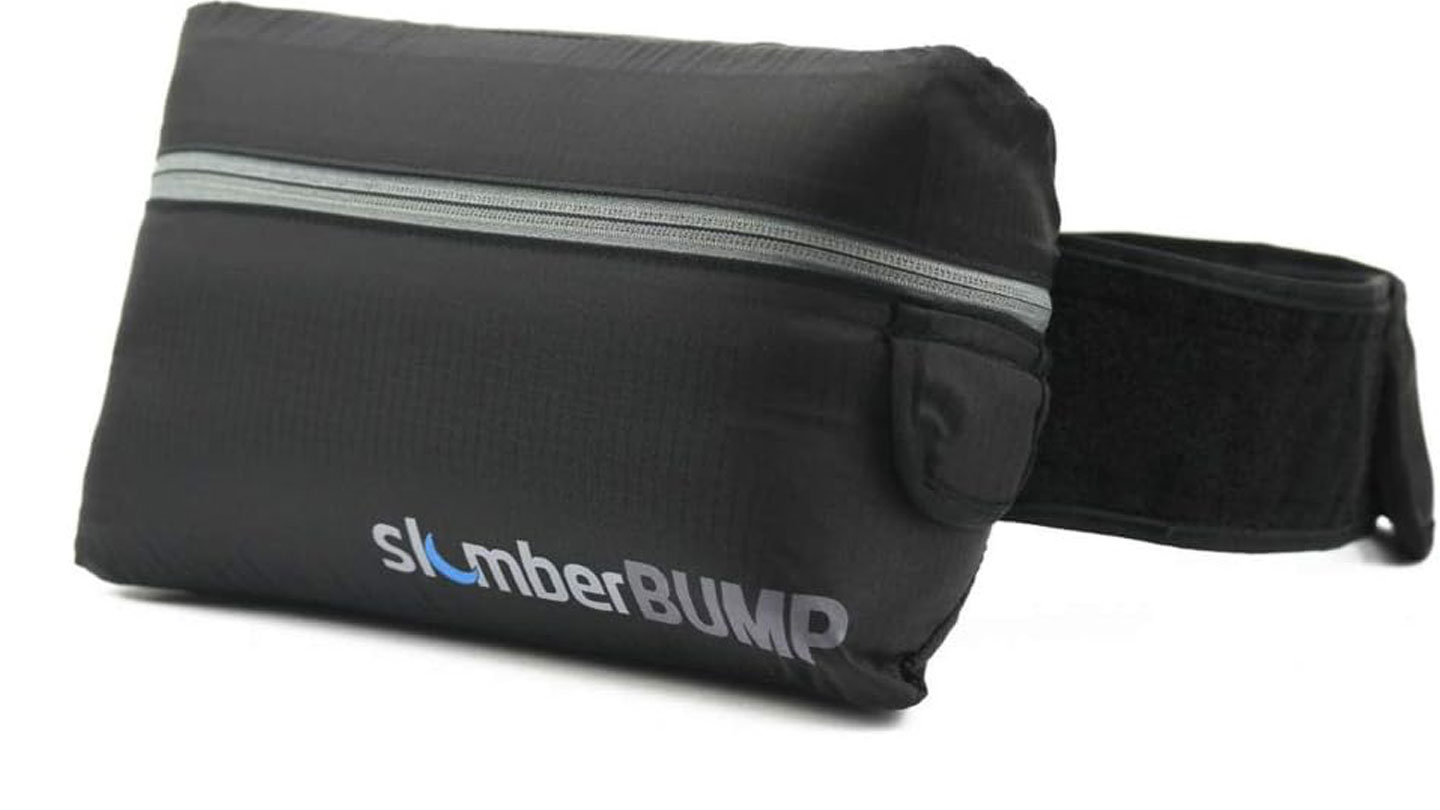
SlumberBump
Chest-worn bumper retrains your body to side-sleep. No mouthpiece needed. Works in ~21 nights.
- ✓ Non-invasive
- ✓ Retrains sleep position
- ✓ No nightly use required long-term
Complete Ranking
All 4 Positional Devices, Ranked
Full reviews published for scored devices. Remaining entries in active testing.
Selector
Which Positional Device Is Right for You?
"My snoring is much worse when I sleep on my back"
We recommend: SlumberBump
SlumberBump is the most proven positional device and the only one with peer-reviewed clinical data. Its chest-worn bumper stops back-sleeping effectively and the retraining effect means many users no longer need it nightly after a few weeks.
Read the review →"I want a passive device with no electronics"
We recommend: SlumberBump or Rematee
Both are simple foam-bumper belts — no batteries, no app, no charging. SlumberBump is more compact; Rematee is machine washable and has a wider belt for added stability.
Read the review →"I want app tracking and compliance data"
We recommend: Night Shift
Night Shift connects to an app that logs your nightly back-sleeping time and vibration events. If compliance tracking matters to you — or your doctor wants data — Night Shift is the only OTC positional device that provides it.
"I already use a CPAP and also snore positionally"
We recommend: SlumberBump
Positional therapy and CPAP are compatible. Side-sleeping improves CPAP effectiveness and can lower your required pressure. SlumberBump's compact design works with most CPAP masks and hose configurations.
Read the review →Alternatives
When Positional Therapy Might Not Be Enough
You snore in every position
If snoring happens on your side as well as your back, positional therapy won't resolve it. A mandibular advancement device (MAD) addresses the underlying airway anatomy rather than just sleeping position.
See MAD Reviews →You have crowns, implants, or TMJ
If position-shifting isn't the answer but you also can't tolerate a mouthpiece, a tongue retaining device (TRD) applies no pressure to the jaw or teeth and may be your best option.
See TRD Reviews →Your sleep apnea is not positional
Positional therapy only works for positional OSA. If your AHI remains elevated in all positions, CPAP remains the gold standard. See a sleep specialist before relying on any OTC device for sleep apnea.
See All Devices →Positional Therapy
Positional Therapy Device FAQ
Want to compare across all device types?
We've tested MADs, TRDs, positional devices, nasal dilators, and more — all ranked on the same seven-criteria system.