Home › Device Reviews › Tongue Retaining Devices
TRD Rankings
Best Tongue Retaining Devices: Tested & Ranked
We buy every TRD at full price, sleep in it for a minimum of four weeks, and score it across seven criteria. TRDs are the best option for snorers who can't use a mouthpiece — here's exactly how each one performed.
How They Work
What Is a Tongue Retaining Device?
A tongue retaining device (TRD) — also called a tongue stabilizing device (TSD) — uses a small silicone suction bulb to hold the tip of your tongue forward during sleep. When the tongue is held in a forward position, it can't collapse backward into the airway. No jaw advancement, no boil-and-bite, no contact with teeth or jaw joints. TRDs are the preferred option for anyone with crowns, implants, dentures, or TMJ disorder.
No jaw pressure
The suction bulb attaches only to the tongue tip. Your jaw, teeth, and joints are completely uninvolved — safe for all dental work.
No fitting required
TRDs require no boil-and-bite fitting process. Remove from the package, wet the bulb, apply suction to the tongue tip, and you're done.
Mouth breathing OK
Because the device sits between the lips rather than across the jaw, the mouth can open and close freely throughout the night.
Full Reviews
Our Tested & Scored TRDs
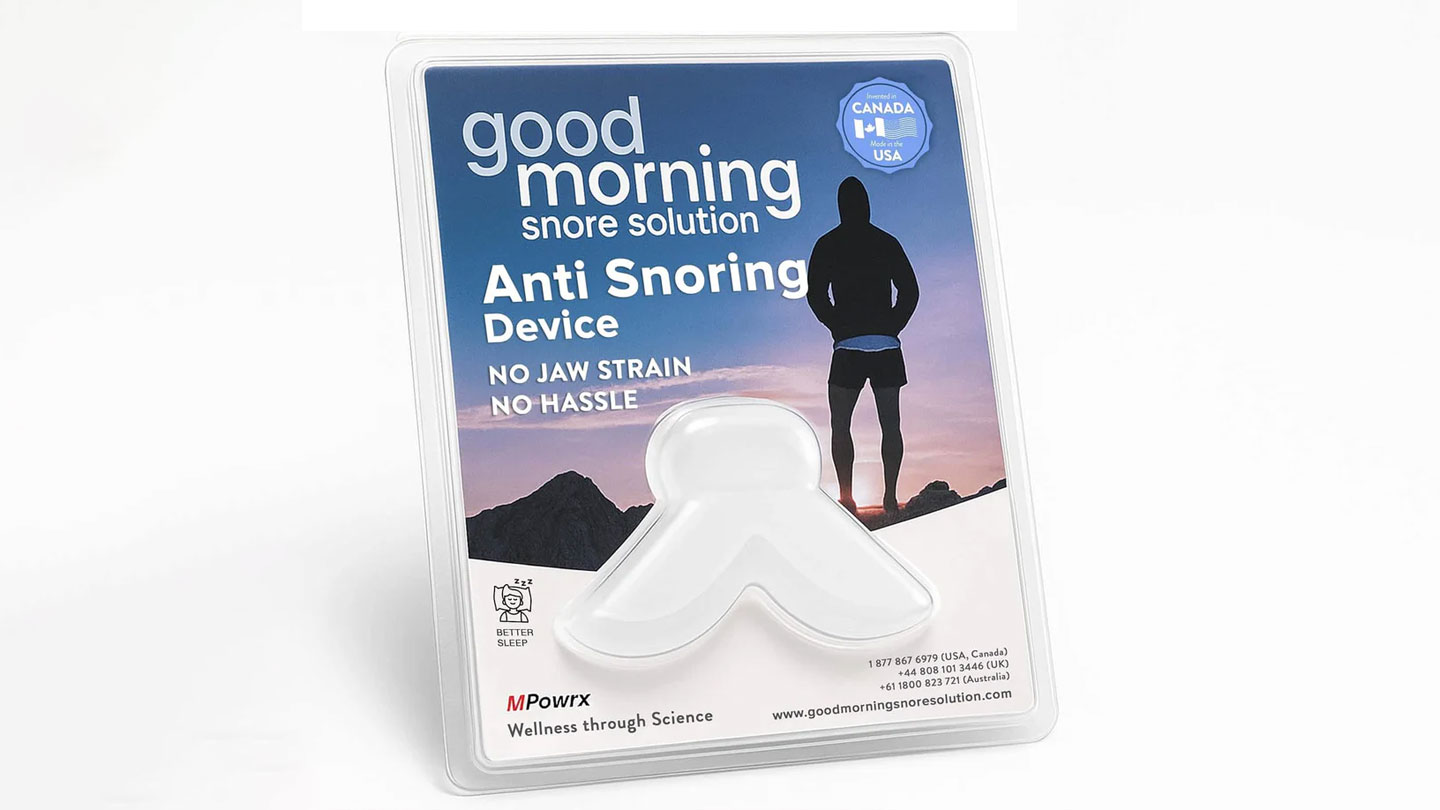
Good Morning Snore Solution
Dentist-designed suction TSD. No jaw pressure, no fitting required. Safe for crowns, implants, and TMJ.
- ✓ No jaw or tooth pressure
- ✓ FDA cleared
- ✓ Works with dental work
Complete Ranking
All 2 TRDs, Ranked
Full reviews published for scored devices. Remaining entries in active testing.
Selector
Which TRD Is Right for You?
"I have crowns, implants, or active TMJ"
We recommend: Good Morning Snore Solution
No contact with teeth or jaw joints. The suction bulb attaches only to the tongue tip — completely safe for all dental work and TMJ sufferers.
Read the review →"I tried a MAD and it caused jaw soreness"
We recommend: Good Morning Snore Solution
TRDs apply zero pressure to the jaw. If you had jaw soreness or TMJ aggravation with a mouthpiece, switching to a TRD eliminates that issue entirely while still treating tongue-base snoring.
Read the review →"I'm a mouth breather"
We recommend: Good Morning Snore Solution
Unlike most MADs that clamp the jaw shut, TRDs leave the mouth free to open. The suction bulb sits between the lips without blocking airflow.
Read the review →"I want a dentist-designed clinical option"
We recommend: AveoTSD
AveoTSD was developed by a New Zealand dental researcher and has been sold through dentist channels for years. It's the original TSD and has a strong clinical pedigree.
Alternatives
When a TRD Might Not Be Right
You want the most adjustable option
MADs like SnoreRx offer 10-position jaw calibration. If fine-tuning advancement is important to you, a MAD gives you more control than a TRD.
See MAD Reviews →Your snoring is worst on your back
Positional snorers may not need any oral device. Devices like SlumberBump train your body to side-sleep — no suction bulb, no mouthpiece.
See Positional Reviews →You want a daytime-only option
ExciteOSA is an FDA-cleared device worn for 20 minutes during the day. It tones the tongue through electrical stimulation — nothing worn at night.
See All Devices →TRD Questions
Tongue Retaining Device FAQ
Want to compare across all device types?
We've tested MADs, TRDs, positional devices, nasal dilators, and more — all ranked on the same seven-criteria system.