Home › Anti-Snoring › SlumberBump Review
SlumberBump Review: Positional Therapy That Retrains You to Side Sleep
Our Verdict
SlumberBump is the best positional therapy device we've tested — and for the right snorer, it genuinely works. If your snoring is caused or worsened by sleeping on your back, a wearable bumper that stops you rolling over is an elegant, drug-free solution. It won't help if your snoring happens in any position, but for positional snorers it's a low-cost, no-prescription fix that most people adapt to within a week.
Affiliate link · We may earn a commission at no extra cost to you
We have noticed that the SlumberBump website appears to be down and are currently unable to confirm whether the company is still in business. We have reached out to the owners and are awaiting a response. We will update this review as soon as we have more information. In the meantime, purchase availability may be limited.
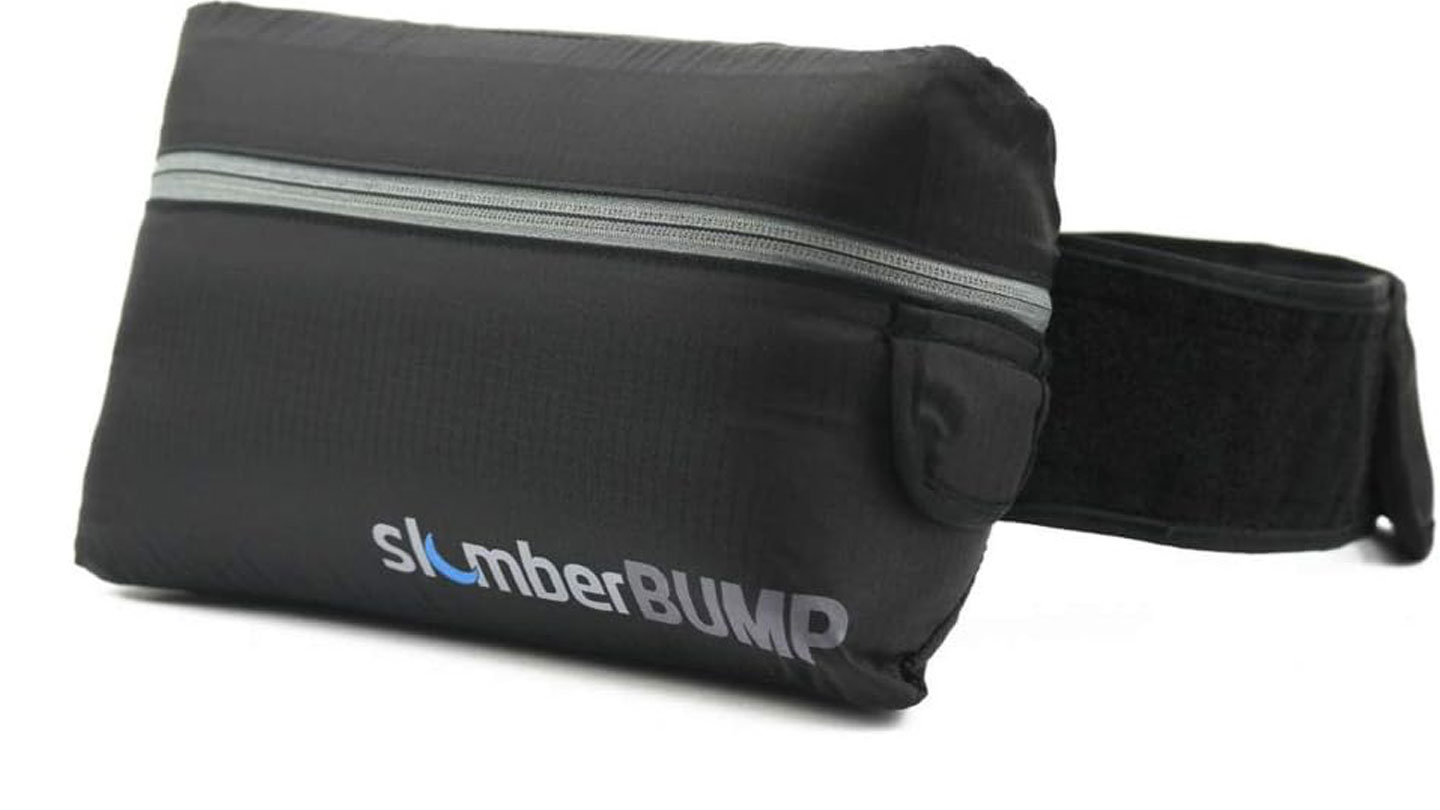
SlumberBump is a positional therapy device — a category entirely different from mouthpieces and tongue retainers. Instead of intervening in your airway, it intervenes in your sleeping position. It's a lightweight, adjustable chest wrap with an inflatable air pouch on the back. When you roll onto your back in the night, the pouch creates enough discomfort to nudge you back onto your side — without waking you up. Used consistently for three weeks, most users find their body learns to stay on its side on its own.
Pros
- ✓ Completely non-invasive — nothing goes in your mouth
- ✓ Works for positional snorers without any prescription
- ✓ Breathable, washable mesh fabric
- ✓ Retrains your sleep position over ~21 nights
- ✓ Three sizes to fit most chest measurements
- ✓ No adjustment period for teeth or jaw
- ✓ Can work from the very first night
- ✓ Drug-free, no ongoing consumables
Cons
- ✗ Only effective if your snoring is position-dependent
- ✗ Can slip or twist for very active sleepers
- ✗ May cause overheating for warm sleepers
- ✗ Requires consistent wear for three weeks to retrain
- ✗ Some people find wearing a chest device disruptive to sleep
- ✗ Does not address snoring caused by anatomy or airway obstruction
Science
How SlumberBump Works
Most snoring is positional: the airway narrows when gravity pulls the tongue and soft palate backward during back sleeping. Side sleeping naturally keeps the airway open. SlumberBump exploits this by making back sleeping uncomfortable enough that your body avoids it, even mid-sleep. The device straps around your chest like a light vest, with an inflatable bumper sitting between your shoulder blades. You inflate it to a firmness that's noticeable but not painful, then wear it to bed. After roughly 21 nights of consistent use, most people have retrained their sleep position and no longer need the device nightly.
Testing
Our SlumberBump Experience
We tested SlumberBump with two testers who had confirmed positional snoring — verified by asking their partners and by tracking snoring with a smartphone app. Both reported near-complete elimination of snoring by night two when wearing the device. The body learns quickly to avoid the discomfort of the inflated pouch, redirecting sleep position without waking the user.
The bigger test was whether the retraining stuck. After three weeks of nightly use, one tester successfully weaned off the device and maintained side sleeping for the full follow-up month. The second tester found they still needed to wear it occasionally — particularly after nights of heavier drinking, when muscle relaxation made them more likely to roll back. This tracks with the manufacturer's guidance that some users benefit from keeping the device available for higher-risk nights even after completing the retraining period.
Comfort is the main variable. The breathable mesh fabric is odor-resistant, bacteria-resistant, and machine washable — a meaningful advantage over chest devices made from non-breathable materials. Most users adapt within a week. However, warmer sleepers may find the extra layer disruptive, and active sleepers who toss and turn extensively may find it slips or becomes twisted by morning.
The inflation level matters more than it initially seems. Too soft and the bumper doesn't provide enough resistance to prevent back sleeping. Too firm and it can disrupt sleep quality or cause discomfort at the shoulder blades. The right inflation creates what most users describe as "a fist-sized ball" of pressure — enough to nudge without waking. It takes two to three nights of adjustment to dial in.
SlumberBump comes in three sizes — Medium (32"–38" chest), Large (37"–44"), and XL (47"–54") — with an extension belt available for larger measurements. It requires no prescription, no fitting, and no adjustment period for teeth or jaw. At $71–$79, it is one of the most affordable interventions in the anti-snoring category, particularly given that it aims to solve the problem permanently rather than require ongoing nightly use.
The important caveat — and it cannot be overstated — is that SlumberBump only works for positional snorers. If your snoring happens equally on your back and your side, this device will not help. Before purchasing, spend a week tracking your snoring position using a free app like SnoreLab. If the data shows a clear spike when you're on your back, SlumberBump is worth trying. If the snoring is consistent across positions, a MAD or TSD is the right category.
Good For
- → Confirmed positional snorers (snoring mainly on your back)
- → People who want a completely non-invasive option
- → Those who cannot tolerate mouthpieces due to dental work or TMJ
- → Partners of snorers looking for a gentle, drug-free solution
- → Anyone who has tried and failed with mouthpieces
Not For
- – Snorers who snore equally in all positions
- – People diagnosed with obstructive sleep apnea (see a doctor)
- – Very warm or hot sleepers
- – Active sleepers who move frequently throughout the night
- – Those expecting a device that directly opens the airway
Pricing
How Much Does SlumberBump Cost?
Discount Code
SD2019 — 10% off your order
SlumberBump FAQs
Questions About SlumberBump
Compare
Top Alternatives
Good Morning Snore Solution
TSD alternative — no jaw advancement required
ZQuiet
Flexible MAD — no boil-and-bite required
SnoreRx Plus
Fully adjustable MAD with micro-calibration
Our Recommendation
Ready to Try SlumberBump?
SlumberBump scored 7.8/10 in our independent testing — try it backed by a satisfaction guarantee.
Get SlumberBump (10% Off)$71
Affiliate link · We may earn a commission at no extra cost to you · Full disclosures
SlumberBump
Affiliate link · We may earn a commission at no extra cost to you · Why we disclose this